INTRODUCTION
Municipal solid waste management is essential for keeping cities clean, reducing landfill dependency, and recovering valuable materials from everyday waste. A Municipal Solid Waste Management (MSW) Plant is designed to systematically collect, segregate, process, and recover different types of waste through a combination of mechanical and biological processes.
But how exactly does a municipal solid waste management plant work? Let’s understand the process step by step.
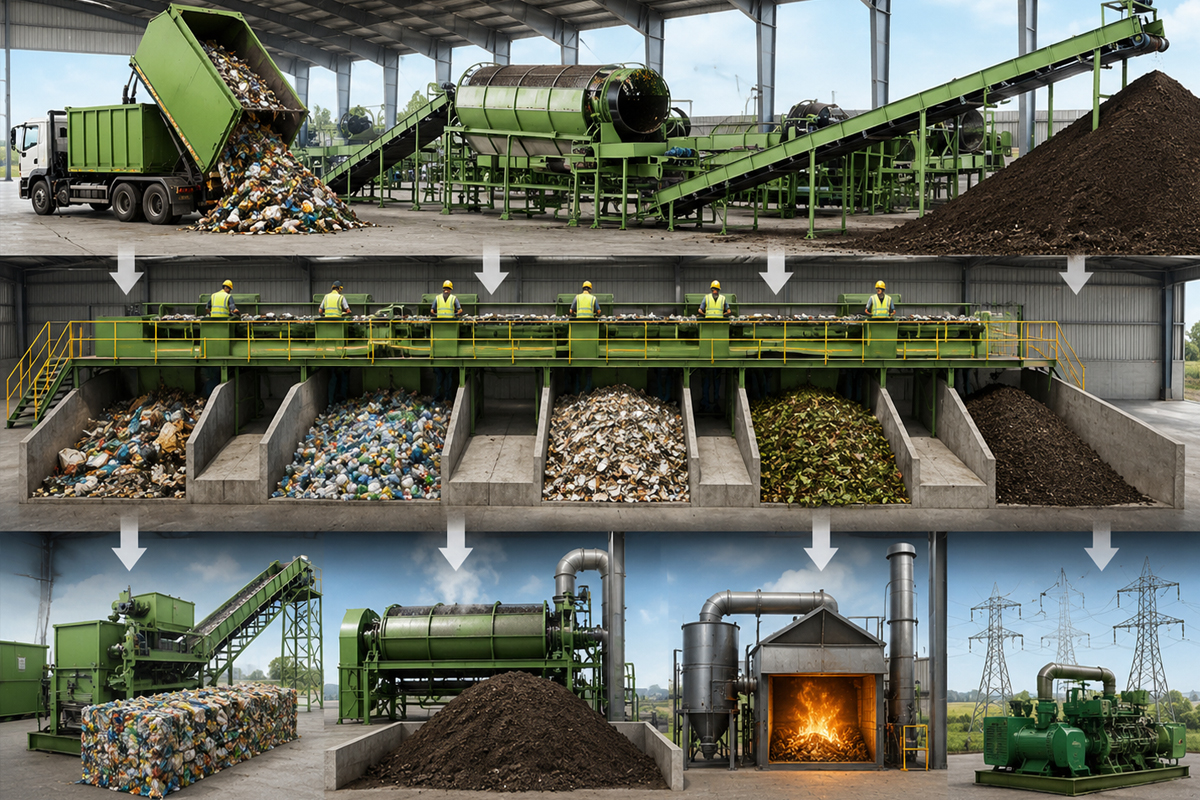
1. Waste Reception
The process begins when collected municipal waste reaches the plant. Waste is unloaded in a designated reception area, where it is inspected and prepared for processing. Proper reception helps maintain a continuous flow of waste into the plant and prevents unnecessary delays.
2. Waste Feeding
The received waste is transferred to the feeding system using equipment such as conveyors or waste-feeding mechanisms. This ensures that municipal waste enters the processing line at a controlled and consistent rate.
3. Waste Segregation
Segregation is one of the most important stages of an MSW plant. The mixed waste is separated into different categories, such as organic waste, recyclable materials, inert materials, and other combustible fractions.
Depending on the plant design, mechanical equipment and sorting systems can be used to improve the efficiency and accuracy of segregation. Proper separation allows recyclable and organic materials to be processed more effectively.
4. Organic Waste Processing
Organic waste, including food and biodegradable materials, can be directed for biological treatment. Depending on the technology used, this material may undergo composting or other organic waste treatment processes.
The objective is to convert biodegradable waste into useful products such as compost while reducing the quantity of waste sent to landfills.
5. Recovery of Recyclable Materials
Materials such as plastics, metals, paper, and other recoverable items can be separated during the processing operation. These materials can then be collected and sent for recycling or further processing.
Material recovery not only reduces landfill volume but also helps conserve valuable resources.
6. Processing of Residual Waste
After recyclable and organic materials have been recovered, the remaining waste is processed according to its characteristics and the plant's design. Suitable fractions may be converted into refuse-derived fuel or handled through appropriate disposal methods.
7. Final Disposal
Only the waste that cannot be economically recovered or treated proceeds toward final disposal. By recovering recyclable and biodegradable materials first, an efficient municipal solid waste management plant can significantly reduce the amount of waste ultimately reaching landfills.
Conclusion
A municipal solid waste management plant works through a series of coordinated stages, including waste reception, feeding, segregation, organic waste treatment, material recovery, residual waste processing, and final disposal. Modern MSW plants help municipalities manage increasing waste volumes more efficiently while supporting recycling, resource recovery, and sustainable waste management.
Choosing the right solid waste management plant manufacturer technology and processing capacity is important for achieving reliable performance and long-term waste management goals.